






Employment Law Webinar Series - September to December 2026
Sign up now for the next four sessions in our Employment Law series 2026
Published: 1st Dec 2026

Those individuals who make “Public Interest Disclosures” (or whistleblowers) perform an essential role by having the courage to speak out about misconduct, corruption and fraud.
Whistleblowing cases are often at a junction of employment law, criminal law and public policy and frequently involve a greater degree of investigation and scrutiny than other claims.
As an employee, you may not even be aware that you have “whistleblown”; you may have thought that you were raising a legitimate concern with your employer. This can come at significant personal risk; the risk of retaliation against you, leading to unexplained career detriments and the consequential financial losses.
Employers faced with an allegation of such detriment, the consequences can be significant, both financially and reputational.
Encouraging whistle-blowing helps protect society from the dangers of corruption and misconduct. If you have been retaliated against as a result of whistle-blowing, let us come to your aid.
Members of the team have appeared for both employees and major employers, private and public.
 Iris Ferber KC (2005 | Silk 2023)
 Mark Maitland-Jones (1986)
 Sinclair Cramsie (1988)
 Benjamin Uduje MCIArb (1992)
 Susan Chan (1994)
 Aysha Ahmad (1996)
 Jude Shepherd (1996)
 Piers Martin (1997)
 Gillian Crew (1998)
 Rebecca Thomas (1999)
 Michael Salter (1999)
 Sam Healy (1999)
 Karen Minto (2001)
 Laura Robinson (2001)
 Jason Braier (2002)
 Jonathan Davies (2003)
 Safia Tharoo (2004)
 Orlando Holloway (2004)
 Amy Stroud (2004)
 Nick Singer (2006)
 Tim Welch (2009)
 Hamed Zovidavi (2010)
 Catherine Urquhart (2010)
 Nicholas Bidnell-Edwards (2012)
 Christi Scarborough (2012)
 Stefan Liberadzki (2013)
 Eleanor Wheeler (2014)
 Alex Lawson (2015)
 Max Gordon (2016)
 Jamie Fireman (2016)
 Andrew Carter (2018)
 Robert Winspear (2019)
 Lucas Nacif (2021)
 Karolina Zielinska (2021)
Sign up now for the next four sessions in our Employment Law series 2026
Published: 1st Dec 2026
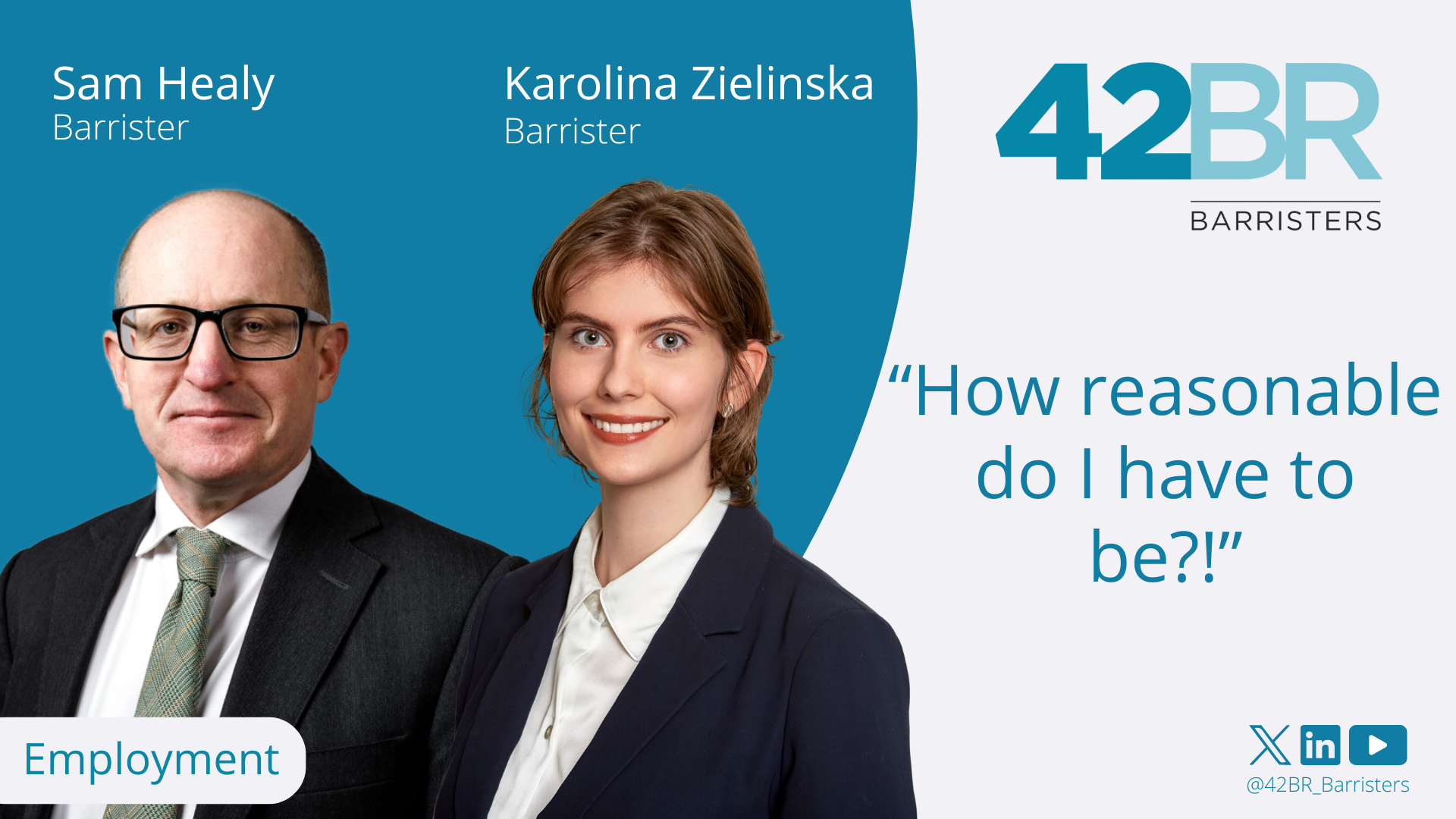
Sam Healy and Karolina Zielinska conclude our April - June employment webinar series.
Published: 1st Jul 2026

We are delighted to present the first 3 webinars in our 2026 series of Employment Law sessions.
Published: 30th Jun 2026
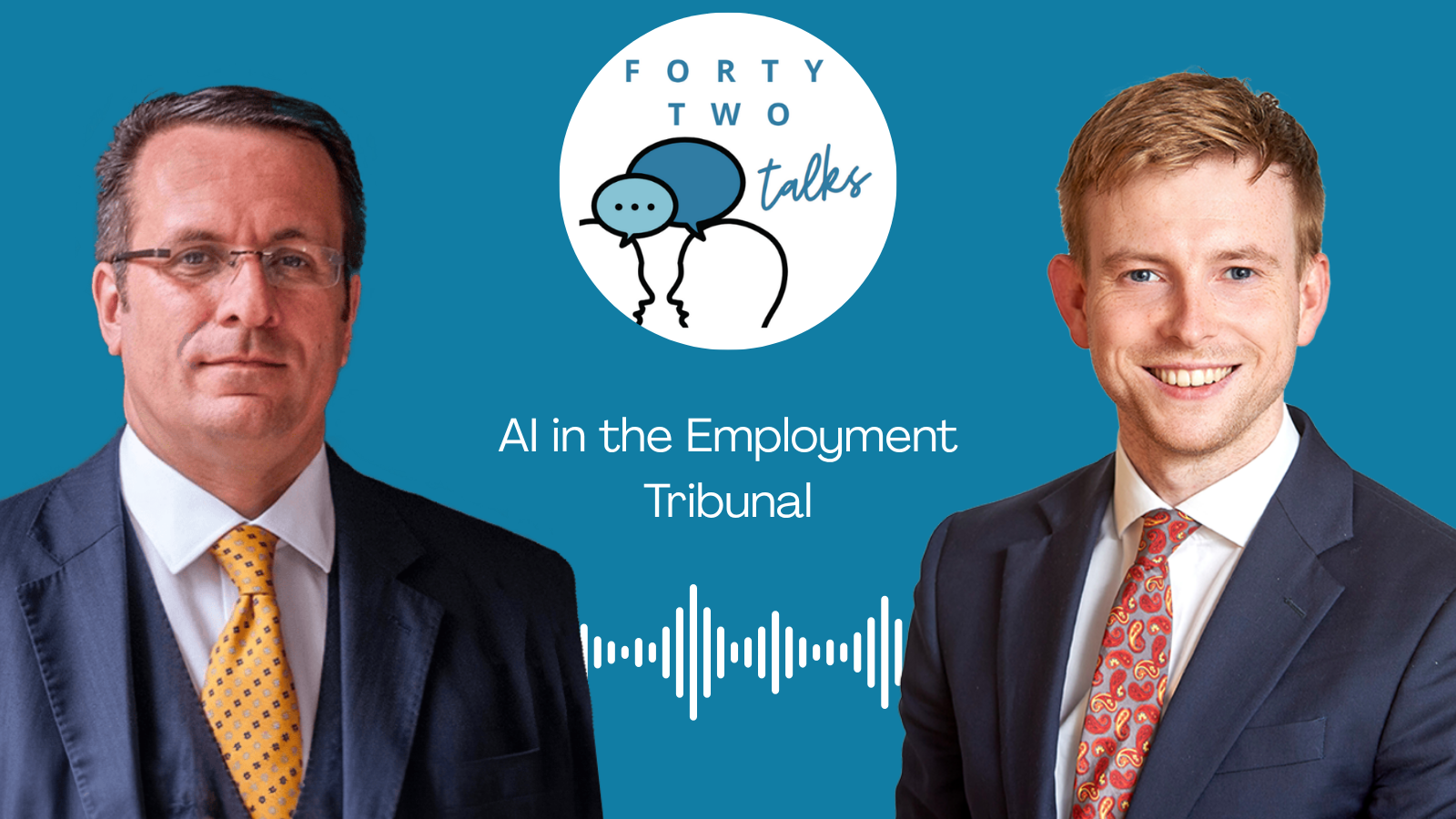
Michael Salter and Robert Winspear discuss the use of AI in the Employment Tribunal.
Published: 25th Jun 2026
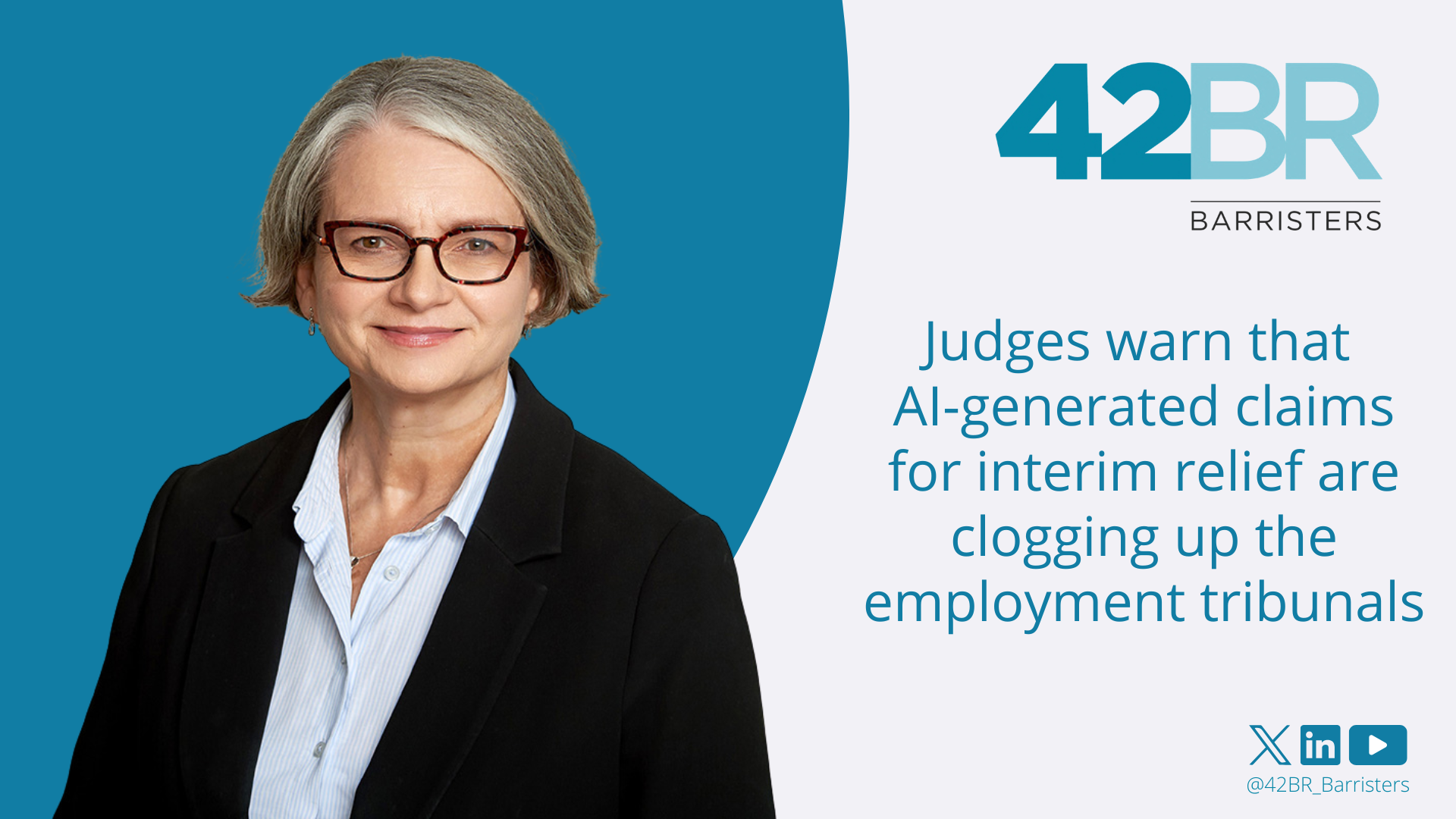
Catherine Urquhart discusses the use of AI when generating claims for interim relief in the Employment Tribunal.
Published: 22nd Jun 2026
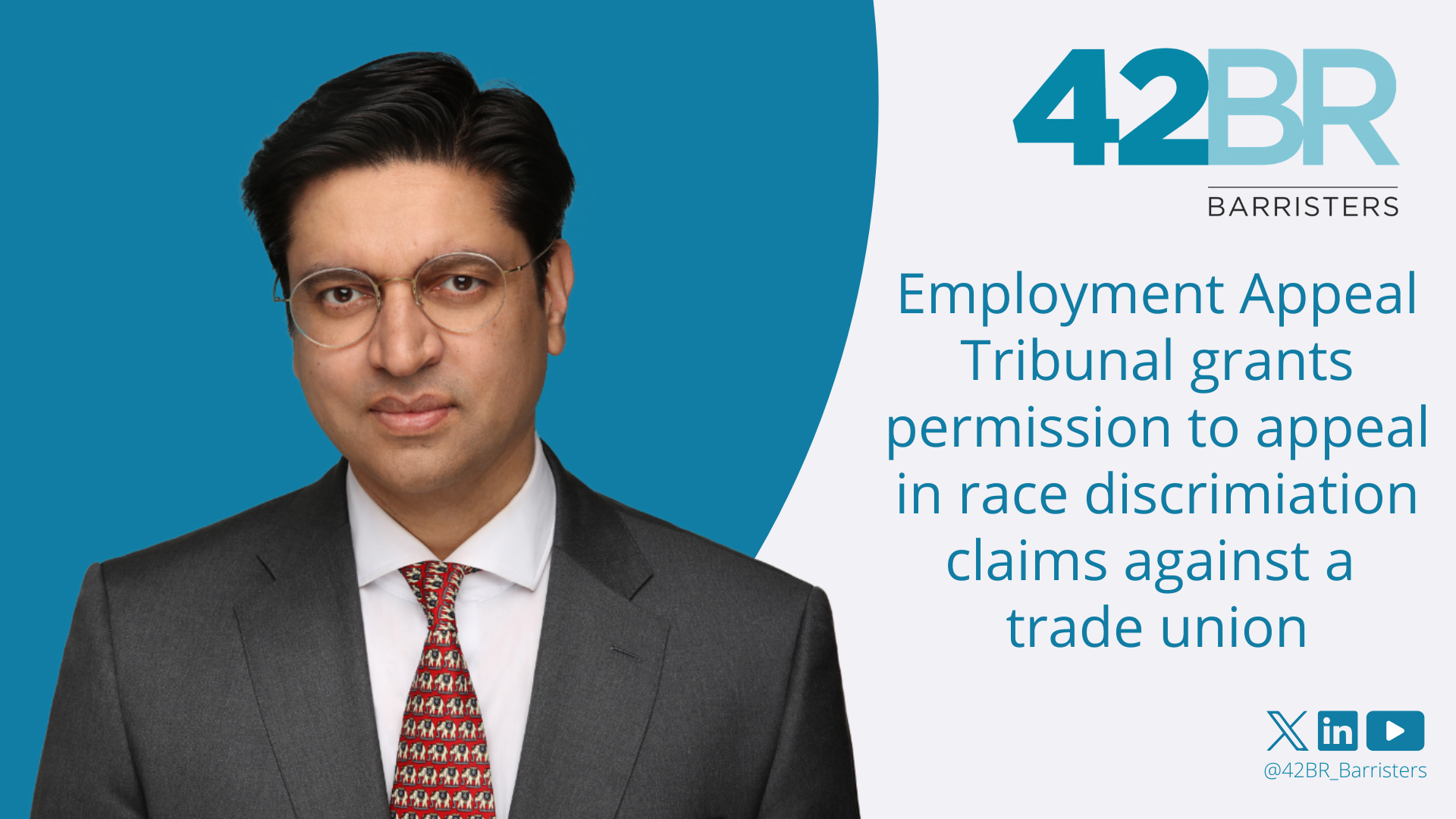
HHJ Auerbach, sitting in the Employment Appeal Tribunal, granted permission to appeal against a decision of the Employment Tribunal which struck out the Appellant’s race discrimination claims against a trade union so that they did not proceed to a full hearing.
Published: 8th Jun 2026
Nicholas Bidnell-Edwards represented the Appellant in the Supreme Court Case Rice v Wicked Vision and Barton Turns Ltd v Treadwell.
Published: 26th May 2026
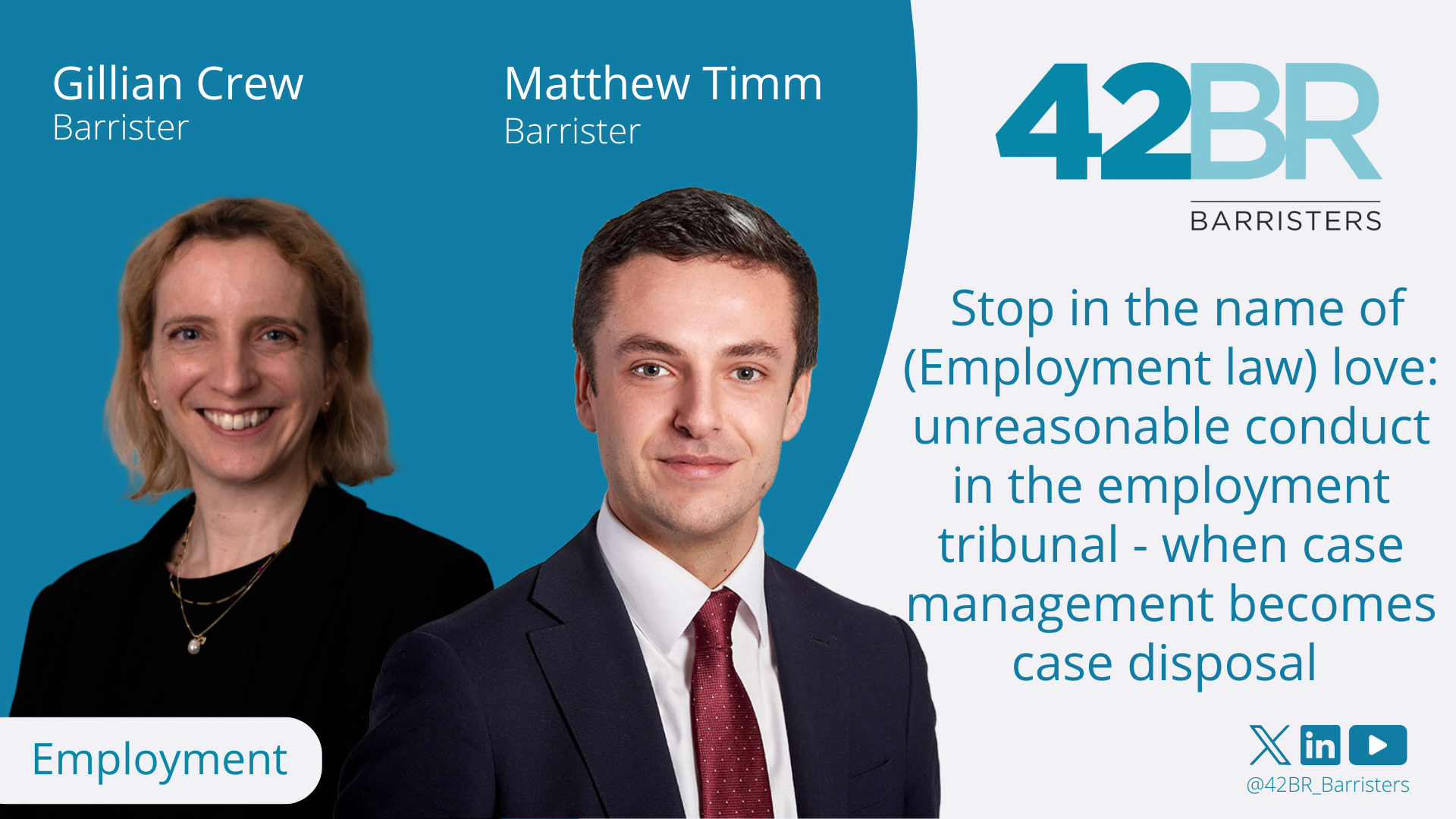
Gillian Crew and Matthew Timm continue our April - June employment law webinar series.
Published: 20th May 2026
![Jack Truman v SPL Powerlines UK Ltd, Network Rail Infrastructure Ltd and Express Medicals Ltd [2026] EAT 54](https://www.42br.com/_files/article/1015/1517-case-note-template-susan.png)
Susan Chan acted for the claimant in Jack Truman v SPL Powerlines UK Ltd, Network Rail Infrastructure Ltd and Express Medicals Ltd.
Published: 7th May 2026
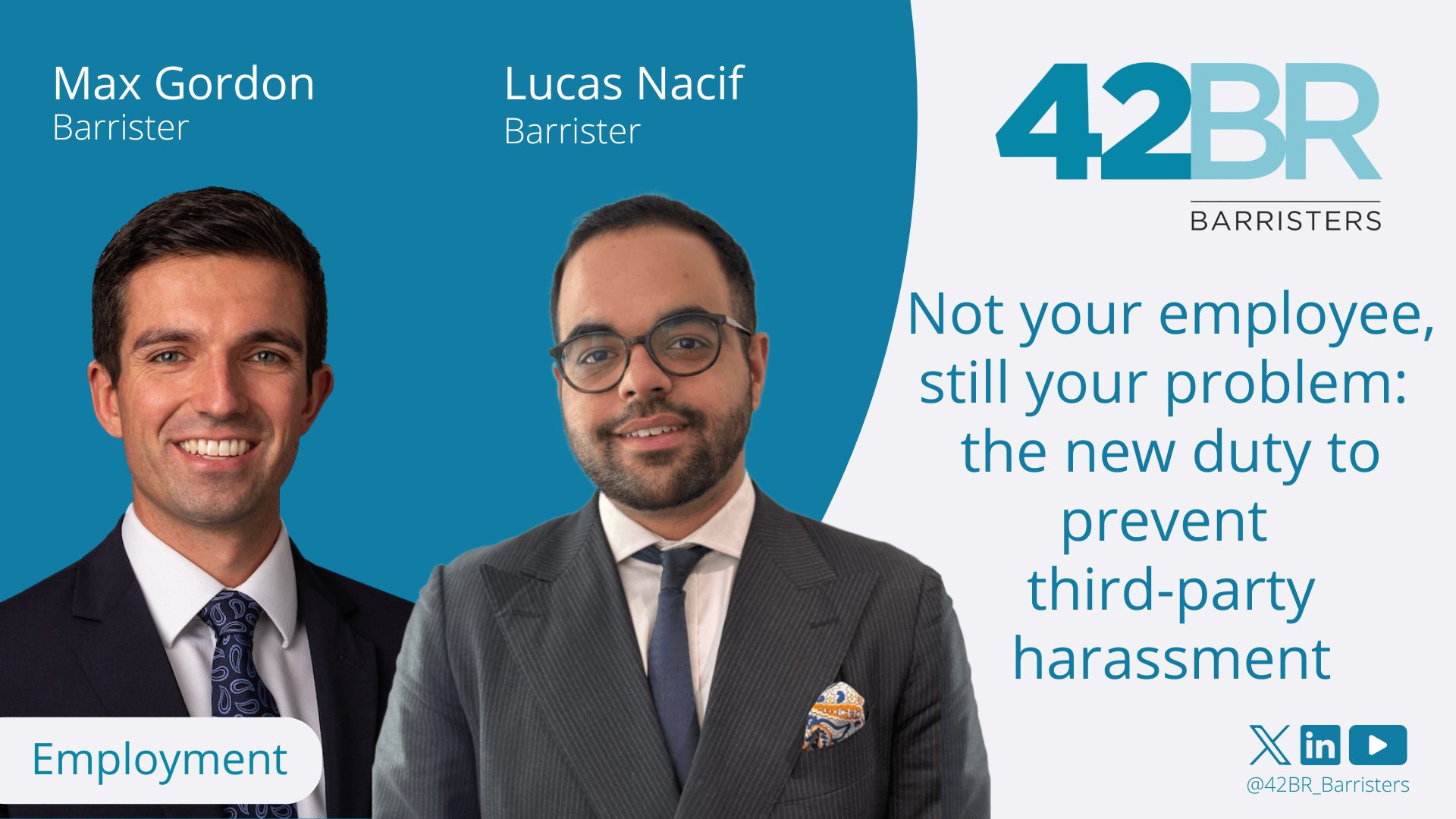
Tune in to catch up on our first employment law webinar of 2026.
Published: 30th Apr 2026
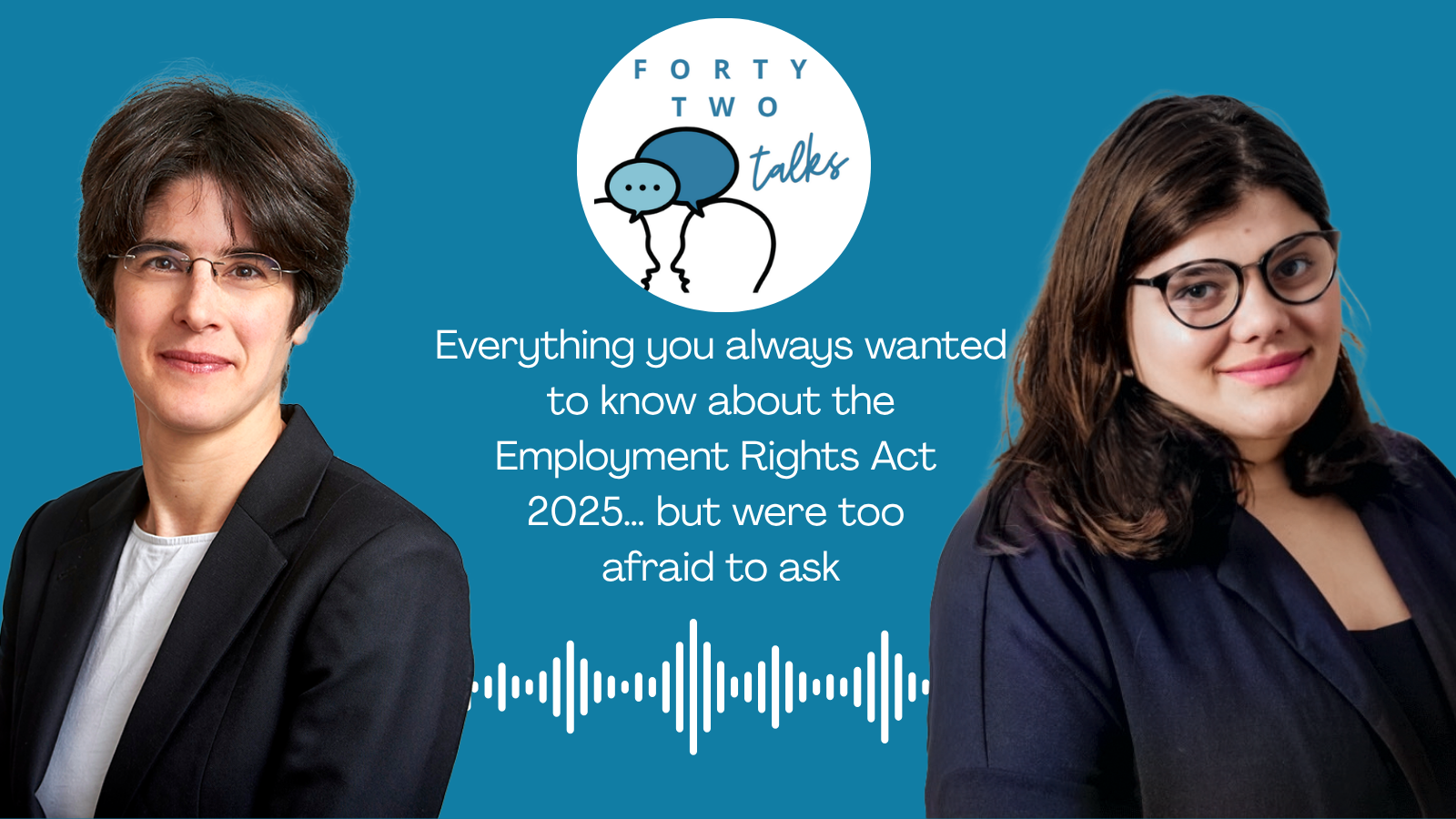
Iris Ferber KC and Carolina Bax introduce the main provisions of the Employment Rights Act 2025 – perhaps the most important change in Employment Law since 2010, when the Equality Act first came into force.
Published: 28th Apr 2026

We are pleased to share that Iris Ferber KC will be speaking at the 2026 IR Global Employment Meeting today.
Published: 24th Apr 2026
Lucas Nacif has written an article discussing cross-border investigations and privilege.
Published: 6th Feb 2026
Catherine Urquhart discusses the case Khorram v Capgemini UK plc, 2025 – the Respondent failed to make reasonable adjustments to help the Claimant, who had ADHD.
Published: 23rd Jan 2026

Lucas Nacif has written an article exploring internal investigations and whether they are covered by legal professional privilege.
Published: 15th Jan 2026
The Court of Appeal has granted permission for the Appellants to appeal to the Supreme Court in the case of Rice v Wicked Vision (Protect intervening) and Barton Turns Developments Ltd v Treadwell [2025] EWCA Civ 1466.
Published: 10th Dec 2025
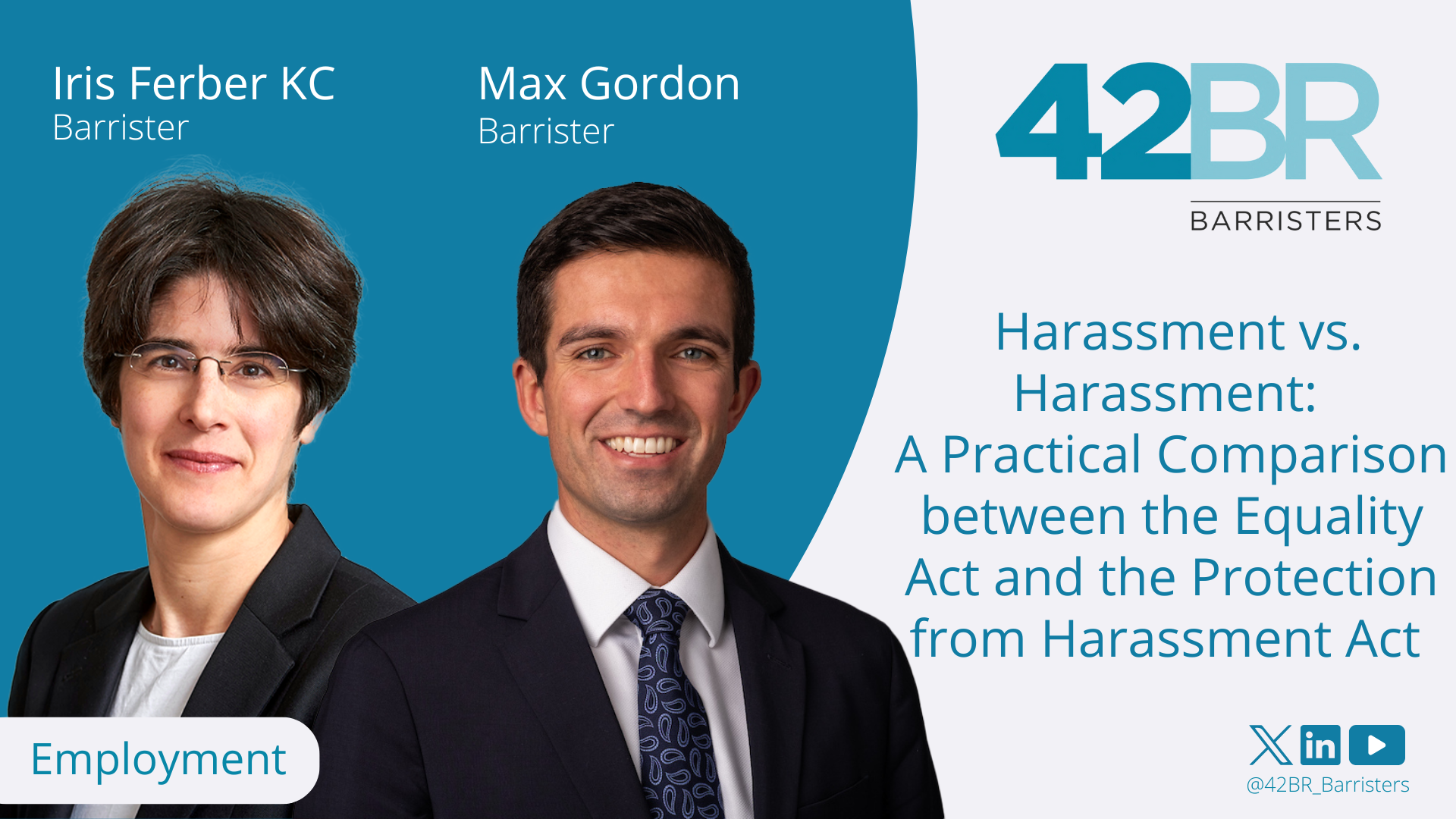
Iris Ferber KC and Max Gordon conclude our 2025 Employment Series of webinars.
Published: 3rd Dec 2025

Sign up now for the next four sessions in our Employment Law Series 2025.
Published: 2nd Dec 2025
Nicholas Bidnell-Edwards acted for the Appellant in the Court of Appeal
Published: 17th Nov 2025
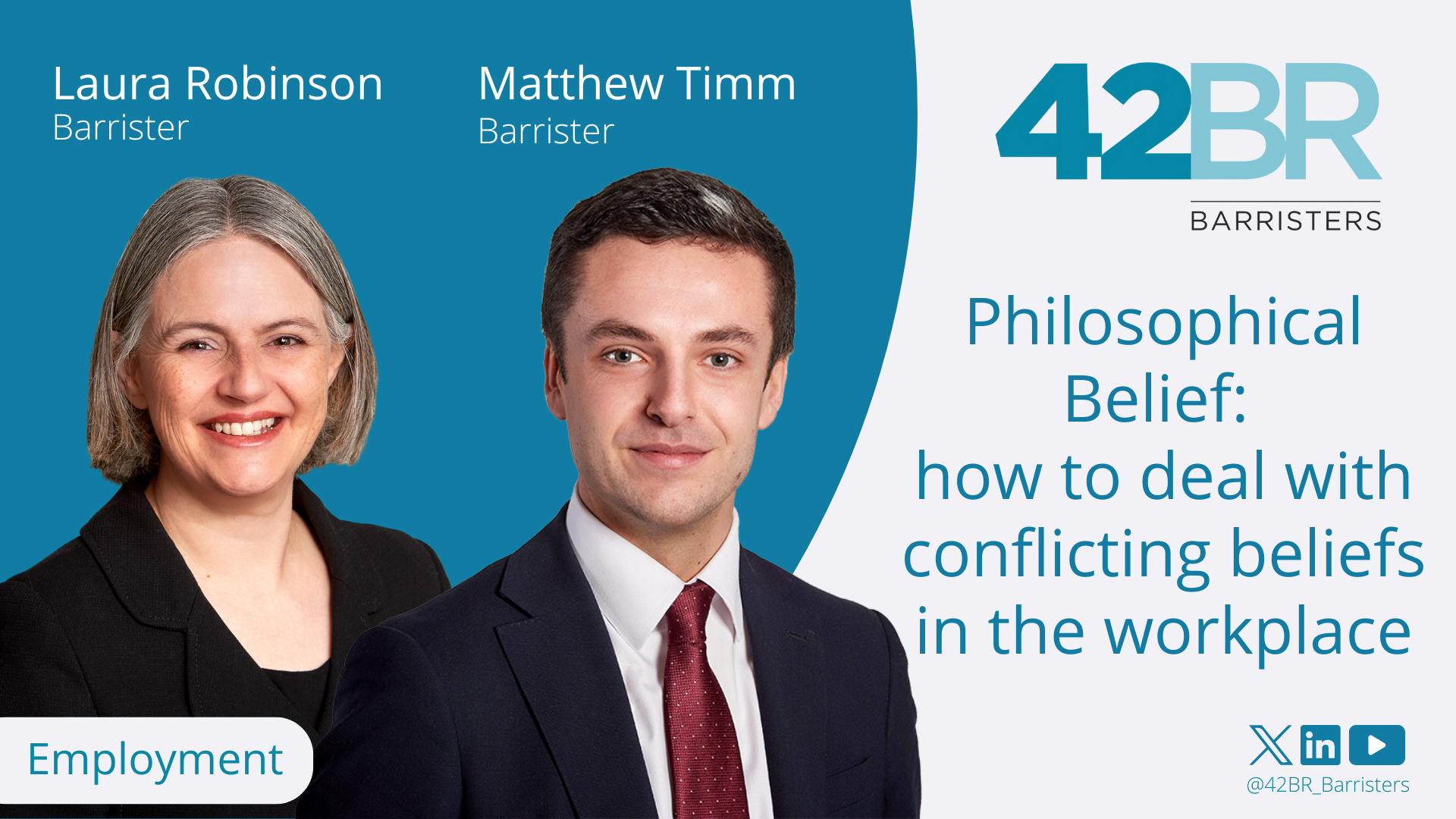
Laura Robinson and Matthew Timm present the next episode in our Employment Law Webinar Series.
Published: 12th Nov 2025
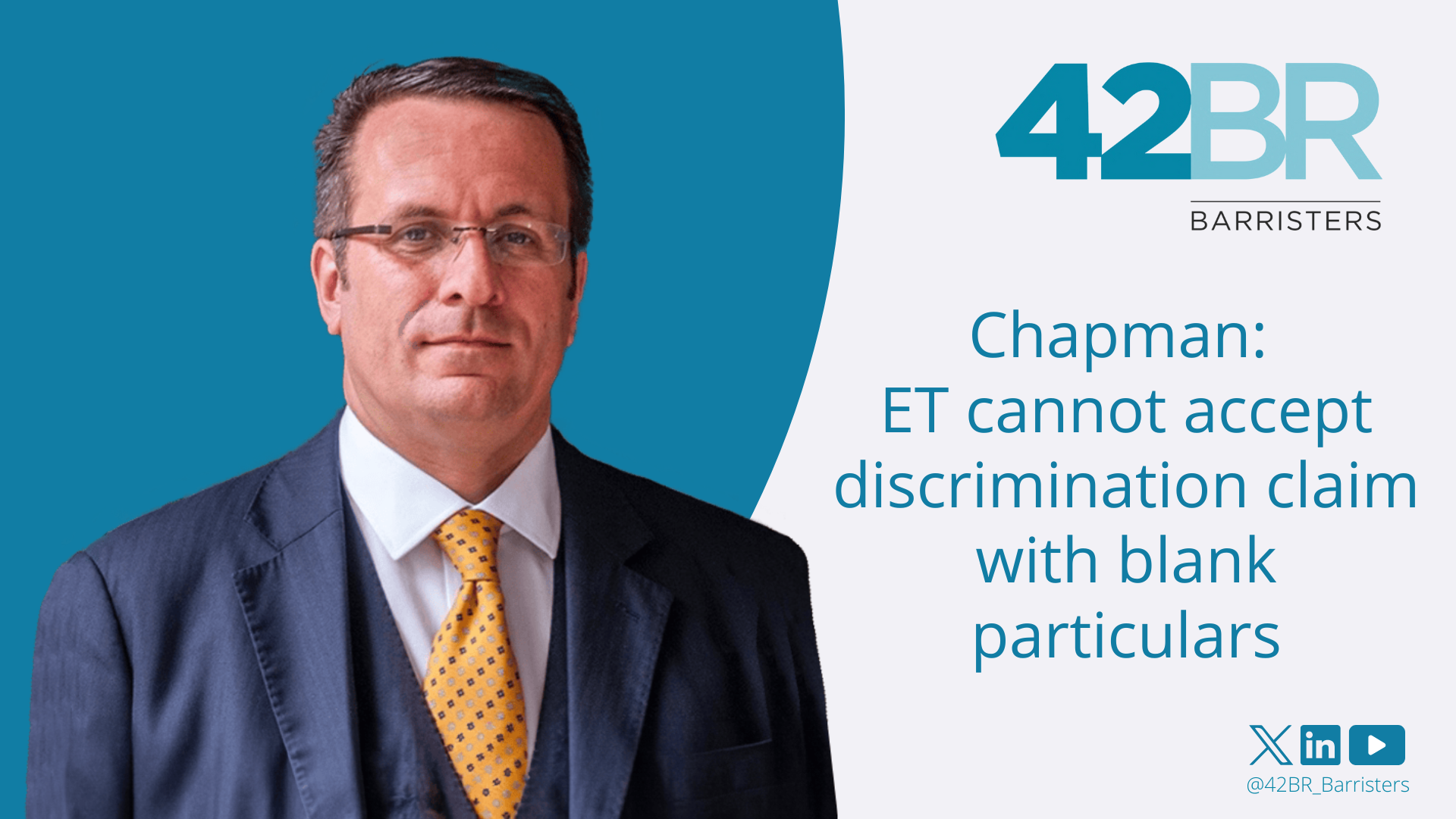
Michael Salter discusses the case: The Scottish Ambulance Service Board v Chapman [2025] EAT 164 Lady Haldane, 2025[MS1]
Published: 11th Nov 2025
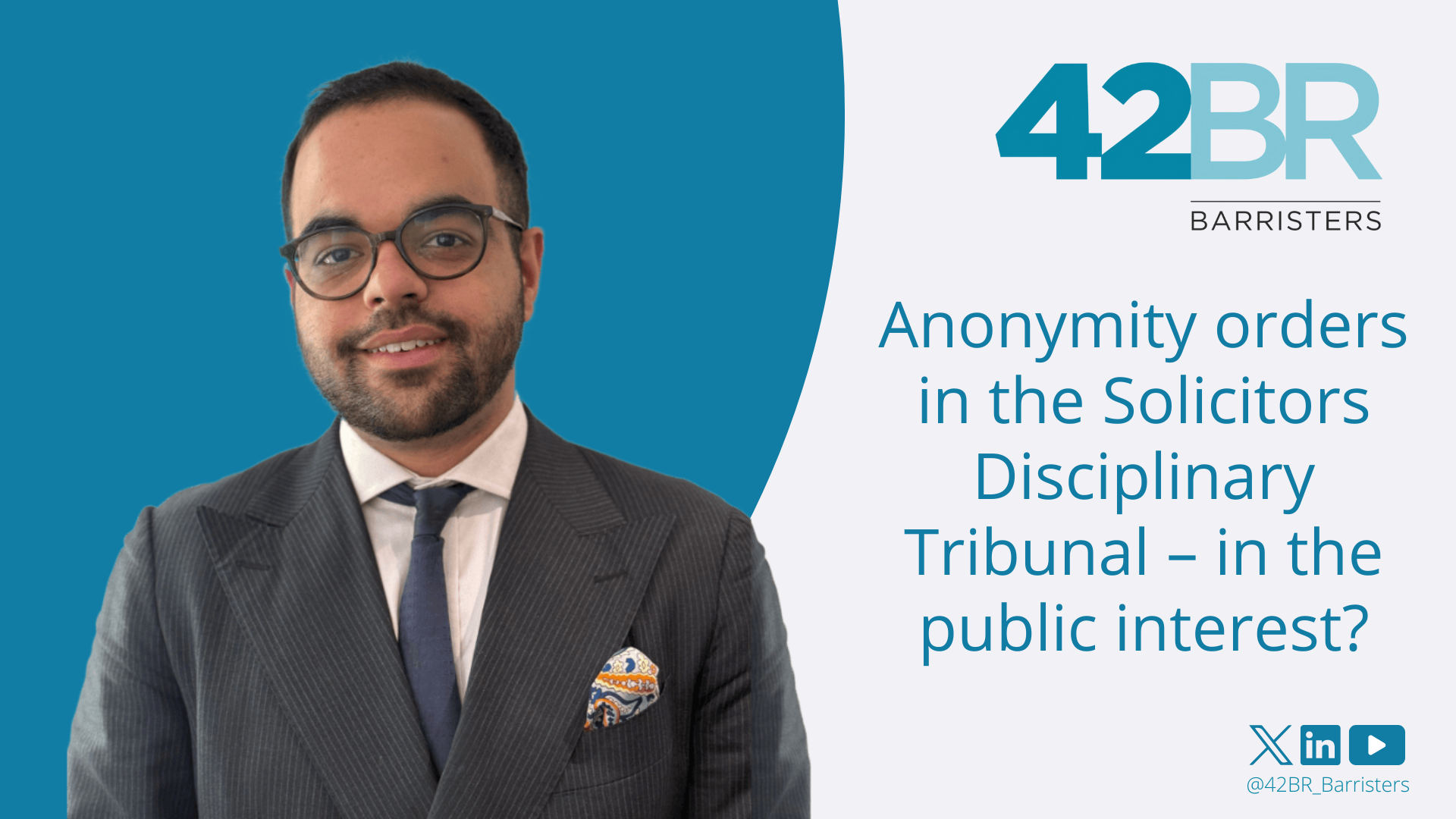
Lucas Nacif has written an article discussing anonymity in the Solicitors Disciplinary Tribunal.
Published: 29th Oct 2025

Michael Salter discusses the case of Khan (Executor) v Vijendran [2025] EAT 125 (HHJ Tucker, 30 July 2025)
Published: 17th Oct 2025

Michael Salter discusses the case of Ms Ann Henderson v GCRM Ltd & Others [2025] EAT 136 (Lord Fairley P, 6 October 2025)
Published: 16th Oct 2025
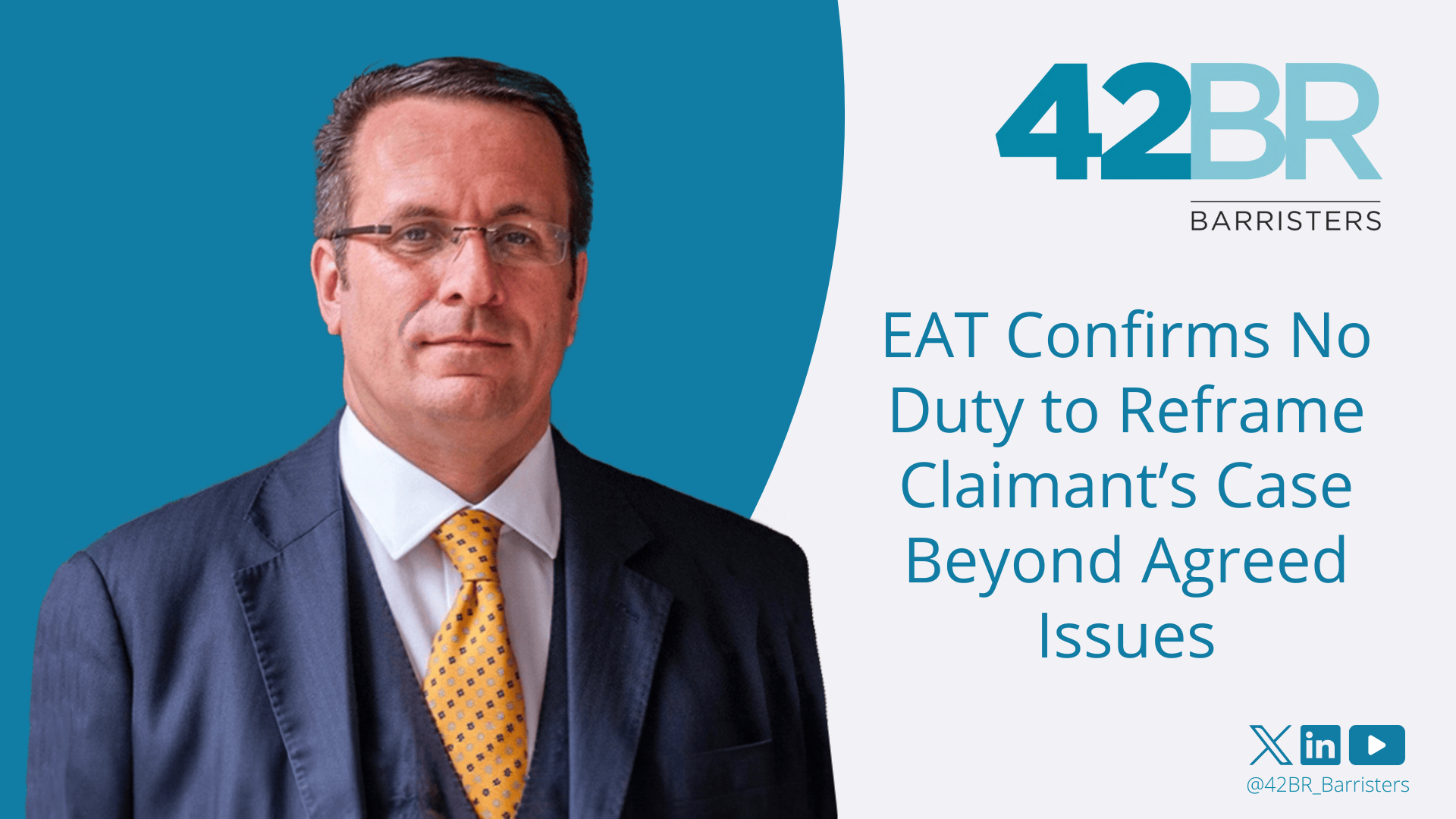
Michael Salter discusses the case of Ashley v Walk the Walk Family Support Service Community [2025] EAT 144 (HHJ Auerbach KC, 17 September 2025).
Published: 14th Oct 2025
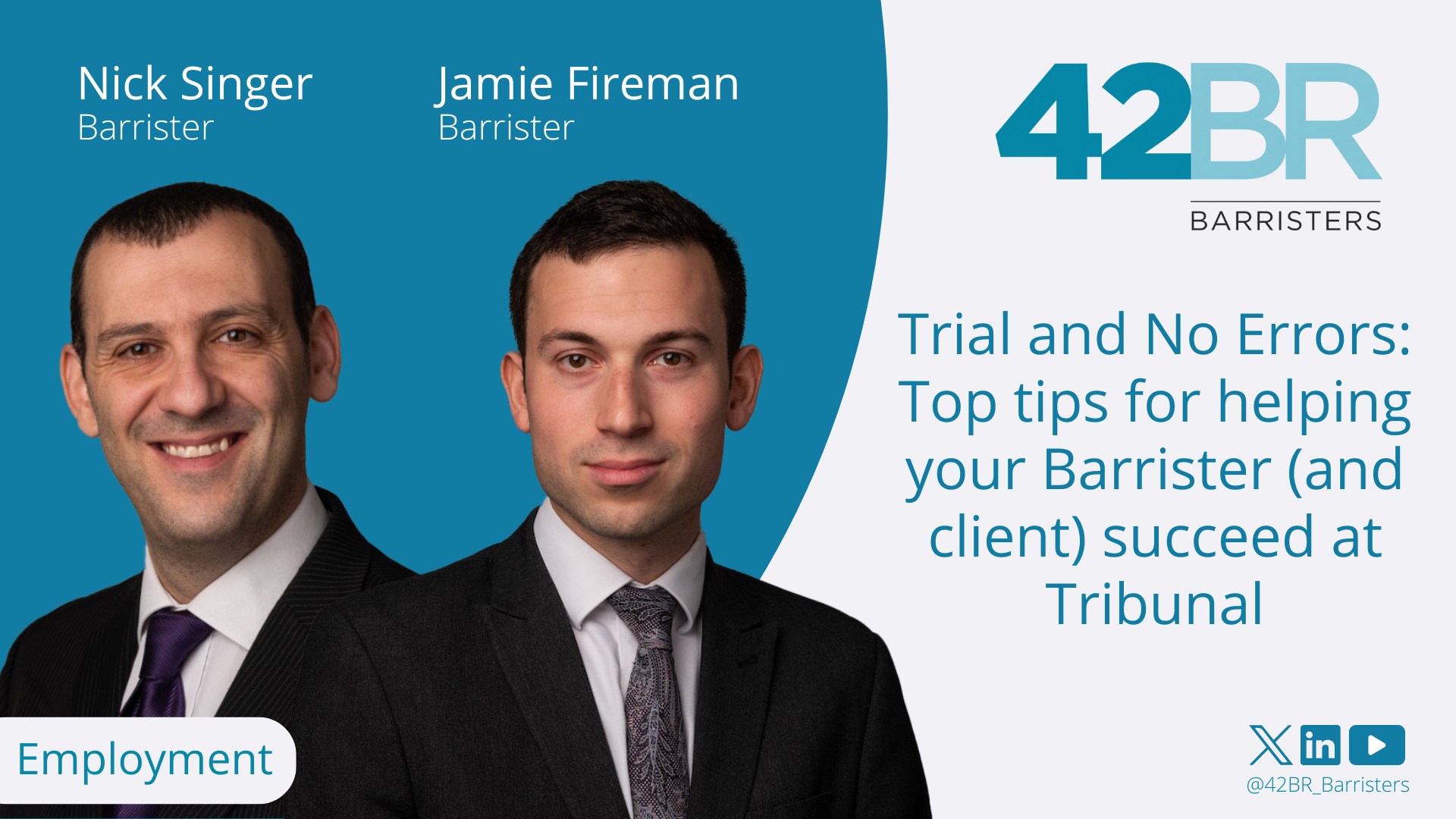
Nick Singer and Jamie Fireman present the next episode of our 2025 employment webinar series.
Published: 13th Oct 2025

42BR Barristers Employment Law Group Annual Lecture - Activism in the Workplace
Published: 25th Sep 2025

Catch up on the recording of our latest Employment Law webinar
Published: 17th Sep 2025

Michael Salter discusses Maltby v Chestnut Inns Ltd [2025] EAT 130, examining whether employment tribunals are required to identify disabilities that have not been pleaded by the parties.
Published: 16th Sep 2025

Michael Salter explores whether failing to attach required documents to a timely Notice of Appeal amounts to a “minor error” under Rule 37(5) of the EAT Rules 1993, or whether it requires an extension of time under Rule 37(1).
Published: 3rd Sep 2025

Lucas Nacif discusses how straightforward it really is for a director to be considered an employee of the company, as well as what, if any, employment rights a director might have if they are not classed as an employee.
Published: 27th Aug 2025

Michael Salter discusses the case of Szucs v GreenSquareAccord Ltd [2025], in which the EAT ruled that not amending a claim to include known, related issues before the final hearing can make a later claim an abuse of process under Henderson v Henderson.
Published: 18th Aug 2025

Arfan Khan, instructed by DCK Solicitors, obtained permission to appeal to the Court of Appeal in a case from the Employment Appeal Tribunal (EAT), involving a novel legal issue under Rule 37 (5) of the Employment Appeal Tribunal Rules 1993 (the EAT Rules).
Published: 12th Aug 2025

The Employment Appeal Tribunal reminds us how tribunals should assess strike-out applications for scandalous or unreasonable conduct that does not clearly preclude a fair trial in Miss S Bailey v Aviva Employment Services Ltd [2025] EAT 109.
Published: 4th Aug 2025

Michael Salter has written a practice note - Strike Out vs Preliminary Determination: Differentiating Tribunal Procedures.
Published: 28th Jul 2025

Lucas Nacif has written an article considering: (i) the extent to which state immunity protects a sovereign State’s property from becoming the subject of enforcement action; and (ii) the practicalities of enforcing an ET or High Court judgment against a sovereign State.
Published: 18th Jul 2025

Jason Braier and Safia Tharoo conclude our latest employment webinar series.
Published: 10th Jul 2025

Sign up now for the next three sessions in our Employment Law Series 2025.
Published: 8th Jul 2025

Jamie Fireman and Alex Adamou host the first of our employment law podcasts, discussing the Employment Rights Bill
Published: 7th Jul 2025

42BR's Lucas Nacif has written an article 'Is an employer required to redact personal data due to their UK GDPR obligations when disclosing documents in ET or High Court litigation?'
Published: 26th Jun 2025

Catch up on the recording of our latest Employment Law webinar.
Published: 25th Jun 2025

42BR's Lucas Nacif has written an article, Prahl v Lapinski – a liberal approach to international jurisdiction in the ET?
Published: 23rd Jun 2025
![Mr Alastair Dobbie v Paula Felton ta Feltons Solicitors: [2025] EAT 71](https://www.42br.com/_files/article/850/1106-susan-chan-case-study.png)
Susan Chan acted for the respondent in Mr Alastair Dobbie v Paula Felton ta Feltons Solicitors: [2025] EAT 71
Published: 30th May 2025

Catch up on the recording of our latest Employment Law Webinar
Published: 28th May 2025
![Rebecca Thomas represents the respondent in Mireku v London Underground Limited [2025] EAT 57](https://www.42br.com/_files/article/840/1087-rebecca-thomas-represents-the-respondent-in-key-eat-decision-on-part-time-worker-protections.png)
Rebecca Thomas represents the respondent in key EAT Decision on Part-Time Worker Protections
Published: 13th May 2025

The members of 42BR's Employment Team are delighted to be supporting the LSE Legal Advice Clinic, in partnership with LSE Law School & gunnercooke.
Published: 8th Apr 2025

Sam Healy and Amy Stroud conclude the first half of our Employment Law Webinar Series 2025.
Published: 2nd Apr 2025

Recording of our 'Schedules of Loss and Settlement: Don’t take your chips down when you’re up' webinar
Published: 20th Mar 2025

Recording of our 'Mind the Gap: If you are not on the list you are not getting in!' webinar.
Published: 6th Mar 2025

Aysha Ahmad successfully defended the schools decision to dismiss the claimant on ground of gross misconduct.
Published: 25th Feb 2025

Recording of our 'Section 19A of the Equality Act 2010: a brand new cause of action?' webinar.
Published: 23rd Jan 2025

Watch the recording of our recent 'Holiday pay' webinar
Published: 4th Dec 2024

Watch the recordings of our Employment Law Webinars, which took place between September to December 2024.
Published: 3rd Dec 2024

Recording of our Annual Employment Lecture: Menopause - The Next 'Hot' Topic.
Published: 28th Nov 2024

Recording of our 'Deal or no Deal?' webinar
Published: 27th Nov 2024

Recording of our 'Whistleblowing: Detriment and Dismissal Cases'
Published: 23rd Oct 2024

Arfan Khan represented the successful Appellant on appeal, instructed by Chipatiso Associates LLP
Published: 17th Jul 2024

42BR Barristers is delighted to share that we have been shortlisted for 6 awards, across three practice areas, at The Legal 500 Bar Awards 2024.
Published: 9th Jul 2024
![Stefan Liberadzki acts for successful appellant in Edinboro v Jamma Umoja (Residential Services) Ltd [2024] EAT 61](https://www.42br.com/_files/article/680/653-stefan.png)
EAT considers the extent of the Tribunal’s power to strike out a claim, and the claimant’s entitlement to notice
Published: 11th Jun 2024

Our Head of Employment, Rebecca Thomas, has published a book on pregnancy and maternity in the workplace. Available to purchase now.
Published: 8th May 2024

Jason Braier represented the respondent in Toughfar v Search Education Trust, successfully defending claims of direct religious discrimination and harassment.
Published: 18th Apr 2024

Case summary written by 42BR's Vistra Greenaway-Harvey.
Published: 16th Apr 2024

Case Summary on Lorenzo v the Kingdom of Spain
Published: 18th Dec 2023

Michael Salter and Catherine Urquhart present the next session in our Employment Law webinar series.
Published: 11th Dec 2023
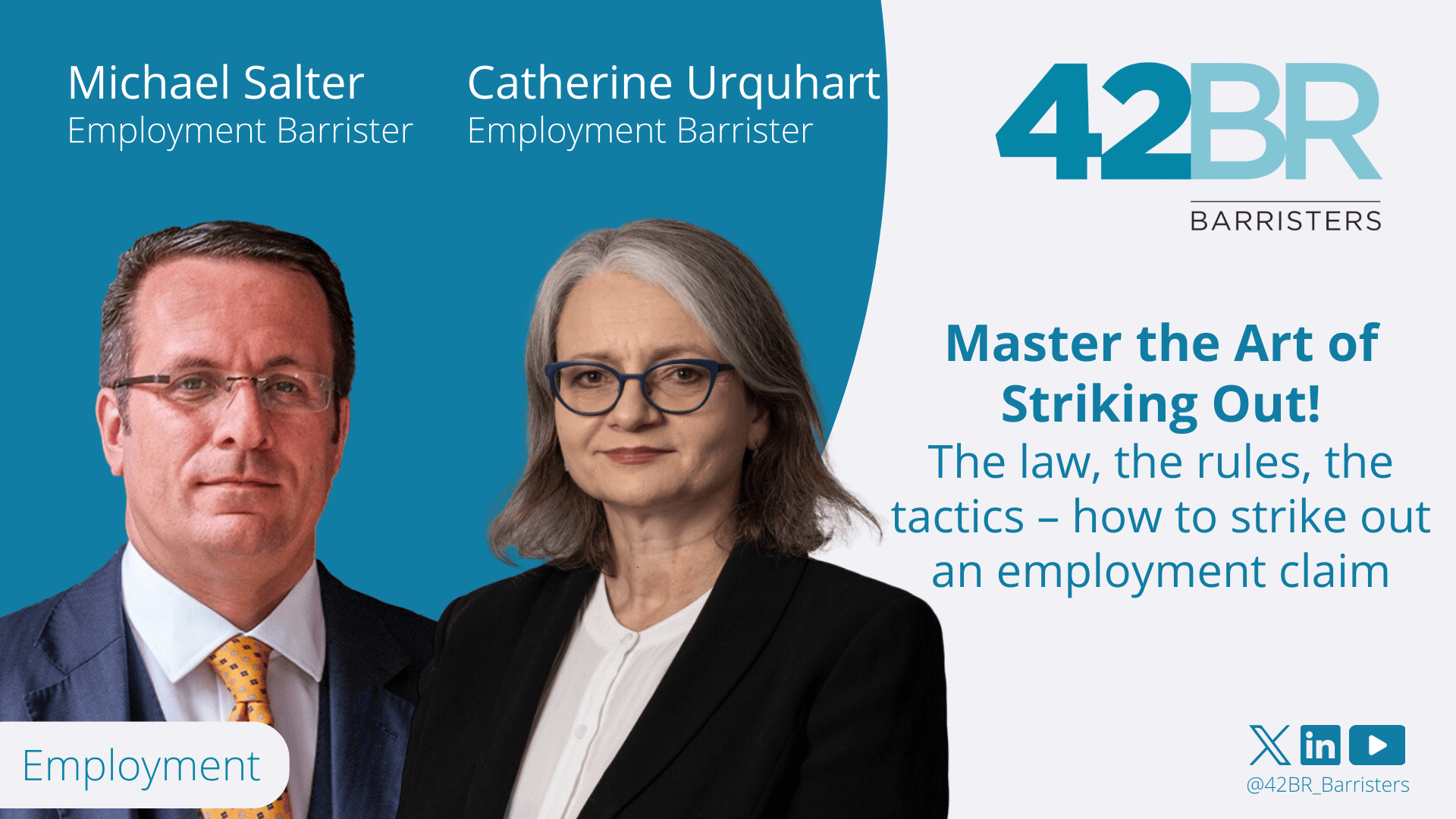
Join Michael Salter and Catherine Urquhart for the next session in our Employment Law series.
Published: 22nd Nov 2023
Our Employment Law Group are pleased to invite you to their annual lecture exploring AI and the implications it may have for employment lawyers.
Published: 8th Nov 2023
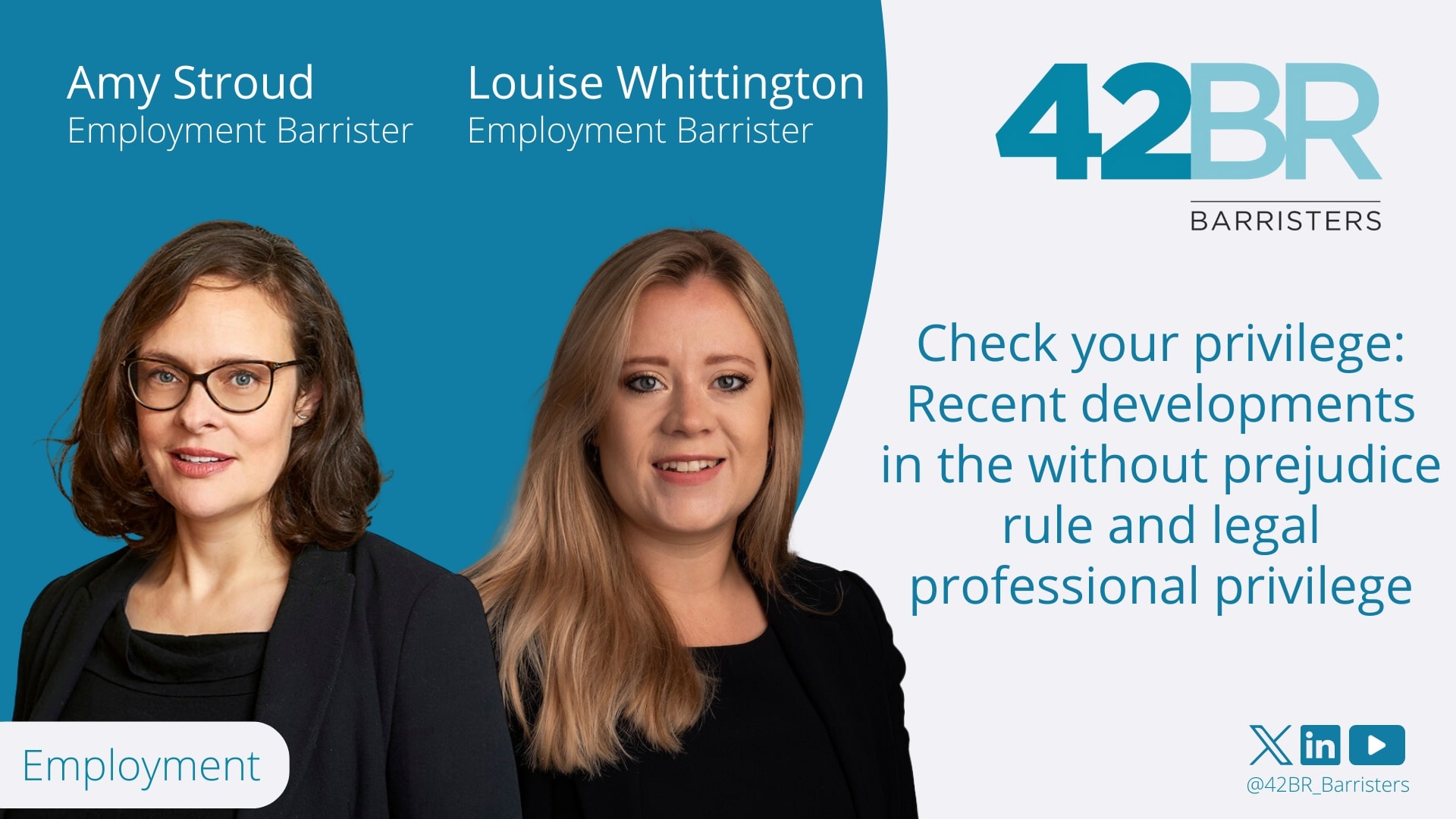
Amy Stroud and Louise Whittington presented our latest Employment Law webinar.
Published: 5th Oct 2023
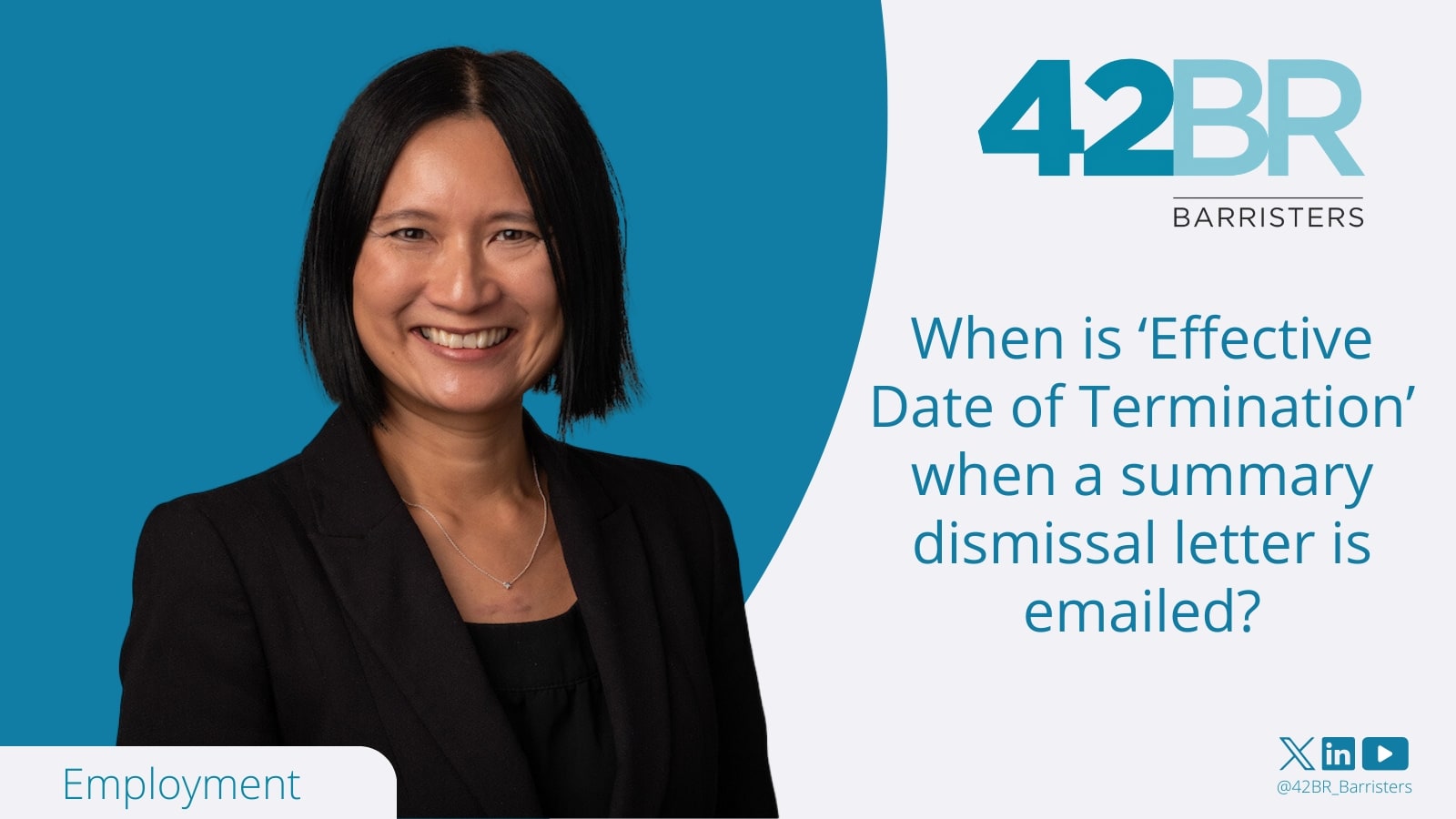
Susan Chan successfully applied to strike out the entirety of the claimants claims of unfair dismissal, whistleblowing and trade union detriment in Carabott v London Brough of Newham.
Published: 2nd Oct 2023
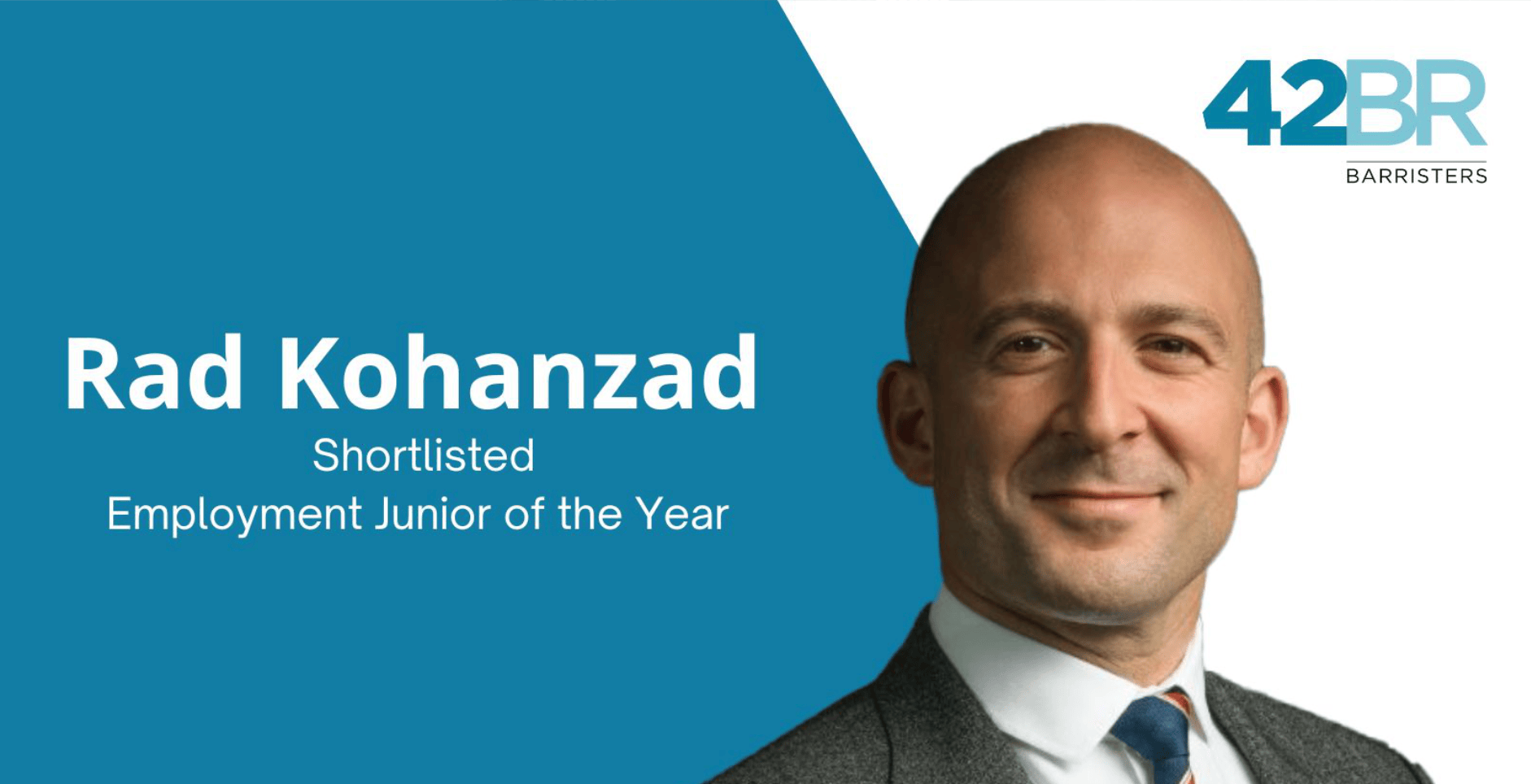
Rad Kohanzad has been shortlisted for Employment Junior of the Year at this years Chambers UK Bar Awards.
Published: 13th Sep 2023
The Handbook is available to purchase now.
Published: 9th Aug 2023

Benjamin Uduje instructed by Capsticks, represents the Hull University Teaching Hospital (HUTH) and four named Respondents in their defence of multiple claims of whistleblowing detriments by a consultant cardiologist.
Published: 2nd Aug 2023

Susan successfully defended the Respondent, a sole practice solicitor, in this long running saga that has been to the EAT and back.
Published: 26th Jul 2023
Jason Braier discusses the Employment Relations (Flexible Working) Act 2023.
Published: 24th Jul 2023
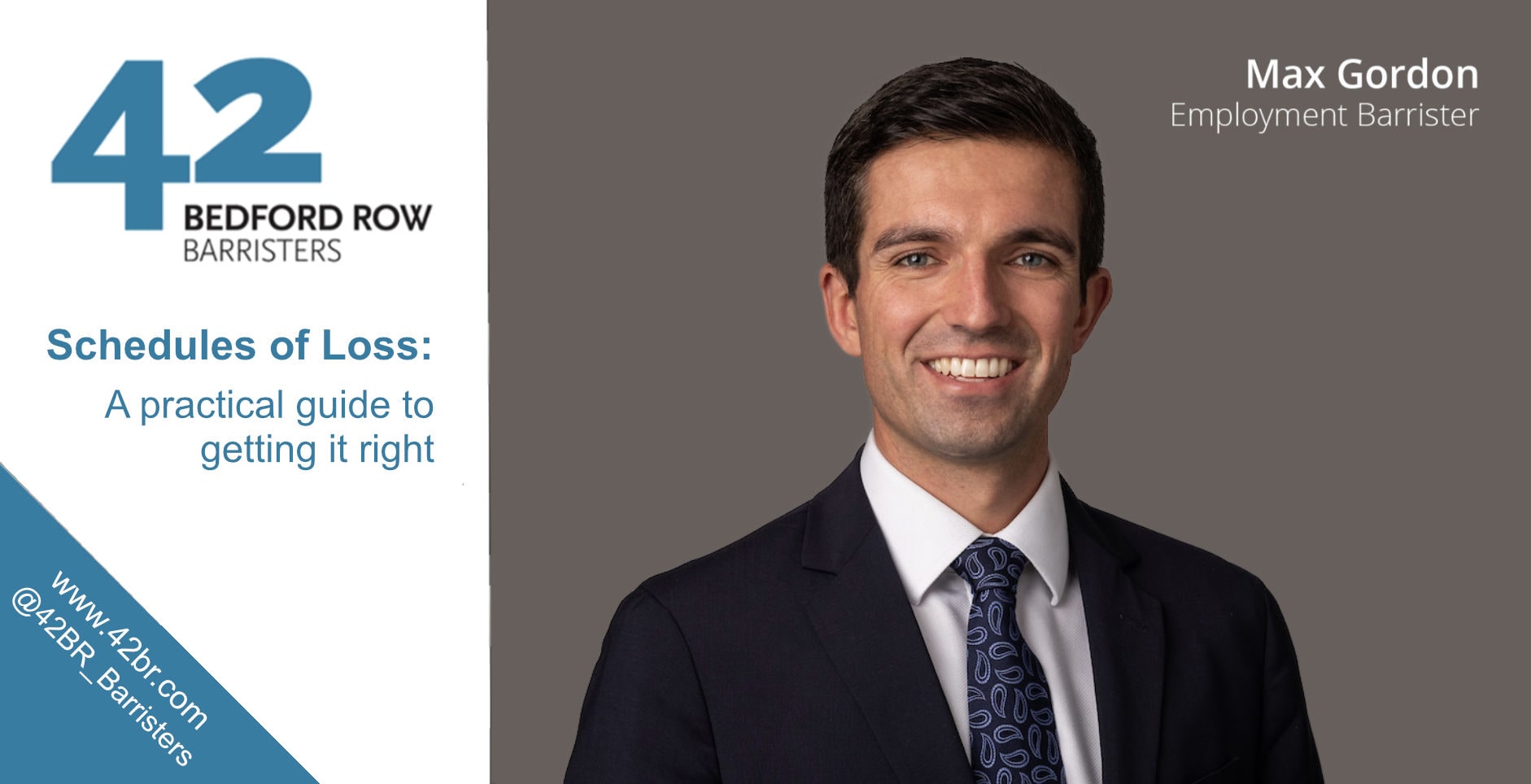
Max Gordon presents the next webinar in our series of Employment Webinar.
Published: 20th Jul 2023

Catherine Urquhart comments on Pilkington UK Ltd v Jones [2023] EAT 90
Published: 14th Jul 2023

We are delighted our Employment team have been shortlisted for 'Employment Set of the Year' 2023.
Published: 12th Jul 2023
Register now for the next instalment of our Employment Law webinars, presented by Max Gordon.
Published: 27th Jun 2023

Jason Braier and Jamie Fireman present the next Employment Law webinar in our series.
Published: 23rd Jun 2023
Susan successfully defended the Respondent, a sole practice solicitor, in this long running saga that has been to the EAT and back.
Published: 15th Jun 2023
A 42BR Employment Webinar, presented by Jason Braier and Jamie Fireman.
Published: 30th May 2023

Case summary of Phipps v Priory Education Services Ltd, provided by Andrew Carter.
Published: 18th May 2023
![Testing Times: Reasonable belief in Health and Safety detriment claim and interplay with disability definition: Miles v Driver and Vehicle Standard Agency [2023] EAT 62](https://www.42br.com/_files/images-article/507-employment.png)
Gillian Crew provides a case summary for the case Miles v Driver and Vehicle Standard Agency [2023] EAT 62
Published: 5th May 2023

Recording of our latest Employment Law Webinar which explores how to develop persuasive witness statements in the Employment Tribunal.
Published: 20th Apr 2023

Employment Law Barrister Safia Tharoo shares her thoughts on Ramadhan in the workplace.
Published: 22nd Mar 2023
Michael Salter presents a webinar looking at Witness Statements for Employment Tribunal Cases.
Published: 21st Mar 2023

Rebecca Thomas has written an article published by Lexis Nexis.
Published: 23rd Feb 2023
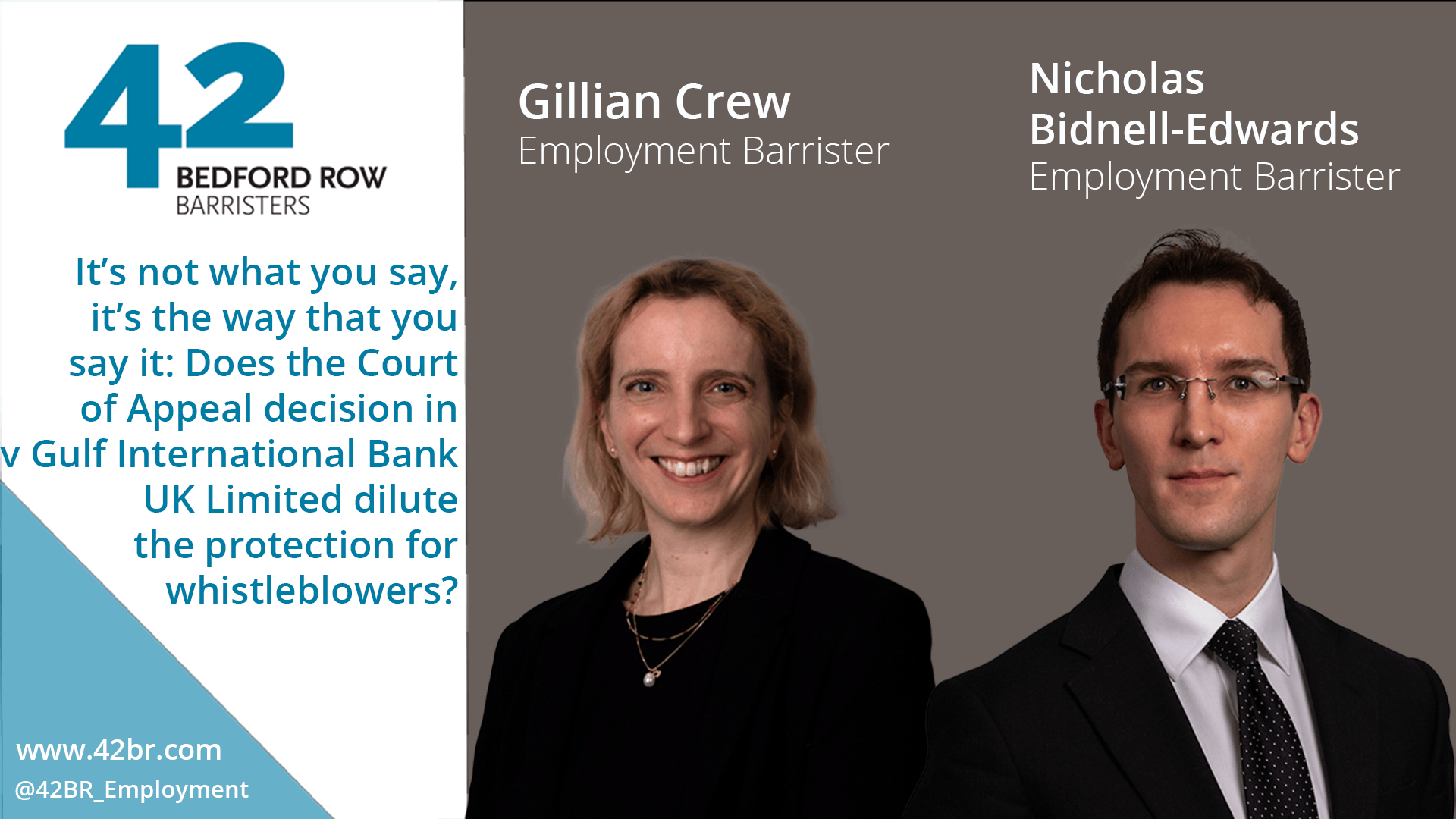
Does the Court of Appeal decision in Kong v Gulf International Bank UK Limited dilute the protection for whistleblowers?
Published: 22nd Feb 2023

Catherine Urquhart represented Unite the Union, instructed by Spencer Wood of OH Parsons LLP
Published: 8th Feb 2023

The case considered the provision of toileting facilities and whether female staff were treated less favourably than male staff when using the same facilities
Published: 3rd Feb 2023

The Court of Appeal handed down judgment today in a group action for non-payment of allowances brought by 400 specialist police officers who formed the Royalty and Specialist Protection squad.
Published: 20th Jan 2023

Susan Chan and Andrew Carter present this webinar on anonymity orders in the Employment Tribunals
Published: 19th Dec 2022

A webinar in which Nick Singer will provide practical tips on how to ensure an Employment Tribunal case is as effective and easy to present as possible.
Published: 22nd Nov 2022

Rebecca Thomas has written an article which Lexis Nexis has published.
Published: 11th Nov 2022

Gillian Crew and Rebecca Thomas explore whether the menopause should be added as a protected characteristic under the Equality Act 2010
Published: 31st Oct 2022

Recording of the Employment Annual Lecture 2022, The Muslim Penalty?
Published: 26th Aug 2022
Join us for an Employment Law Webinar, hosted by Jason Braier and Catherine Urquhart
Published: 16th Aug 2022
In Reverend J G Hargreaves v Evolve Housing + Support [2022 EAT 122], the Employment Appeal Tribunal has clarified when time for instituting an appeal starts to run if the Employment Tribunal has sent out a corrected judgment By Catherine Urquhart
Published: 15th Aug 2022
Extending the list of Protected Characteristics under the Equality Act 2010 to include menopause: is it worth it?
Published: 29th Jul 2022
Jonathan Davies has written an training paper on TUPE, pensions and Beckmann Rights
Published: 7th Jul 2022

Rebecca Thomas has written a case analysis which has been published by Lexis Nexis.
Published: 24th Jun 2022
Awards & Recognition





If you were trying to visit the Four Brick Court (4BC) website, you're in the right place.
As of 3 August 2026, Four Brick Court has joined 42BR Barristers, and the 4BC website has now been redirected here.
You can continue to access the expertise of the former 4BC members via our website. To find a barrister, browse our Barristers pages.
If you need any assistance finding a particular barrister or information, please don't hesitate to contact our practice managers on 020 3911 7600 or email [email protected].
